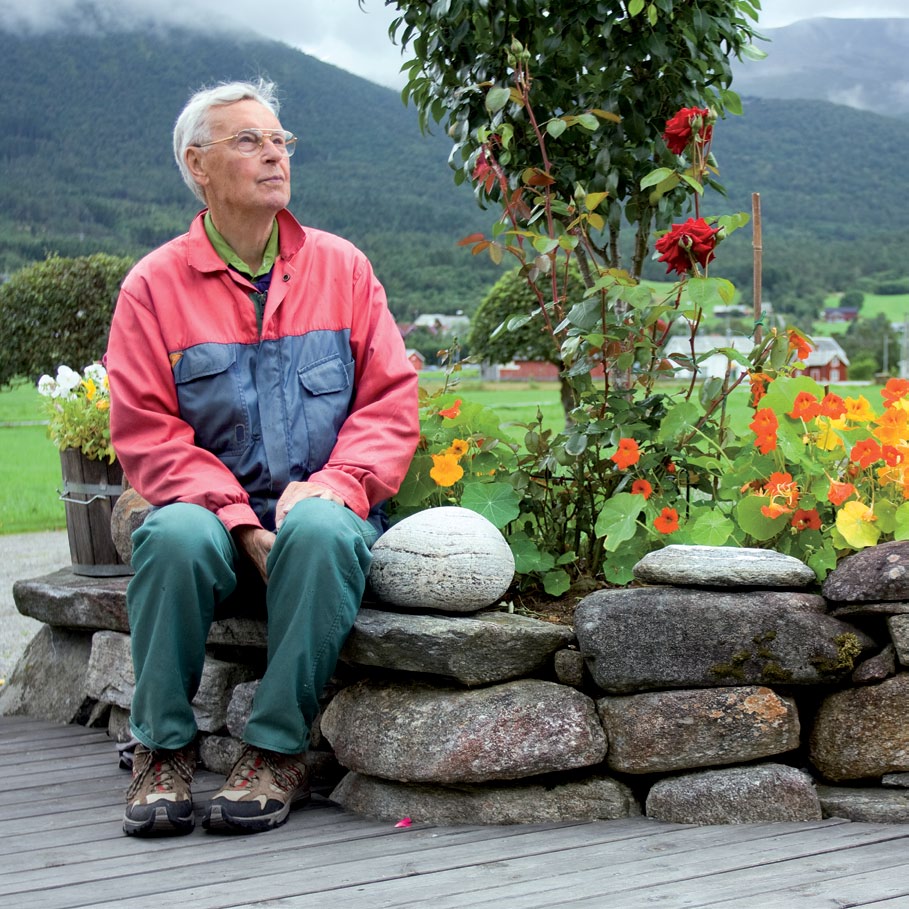
Yoga may affect the body, mind and breathing.
Doing yoga for 10-30 minutes or more every day provides systematic and varied training for the main groups of muscles in the body, along with the tendons and joints. Yoga loosens up some of the stiffness of the body in a slow and gentle way without pain or strain. Incrementally, the body becomes freer and more energetic; the risk of injuries is reduced. Well-being, vitality and strength are likely to increase. Yoga also improves the coordination between body, breath and mind.
Special effects?
Many yoga books claim that each posture has specific effects on the inner organs, nerve centres and hormonal glands. In this way, the postures and the breathing are supposed to alleviate various illnesses and bodily ailments. With the exception of localized musculoskeletal problems, there is hardly any scientific evidence to support such claims. However, several reliable studies show that yoga in general has a beneficial effect on the health of body and mind. We therefore take the view that the most important effects of yoga are not related to specific postures, but rather come from practising well-composed yoga programmes.
Alternating between rest and activity
Bodily training entails activation and exertion. The ability to change between different levels of activation is an advantage, permitting a person to switch easily and quickly from rest to activity and back to rest when the physical or psychological challenges have ceased. A person who is capable of such transitions at work, in leisure time and in various social contexts is less likely to suffer lasting stress than someone who activates rapidly but does not change to a lower gear when the challenge is over. Yoga involves developing the capacity to adapt swiftly to the demands of a situation, i.e., to make healthy transitions. Stressing down may reduce the risk of cardiovascular disease and strengthen the immune system to combat infections and sporadic cellular malformations that sometimes turn into cancer. Yoga modifies the autonomous system which is responsible for stress levels in the body, brain and mind.
Joy of breathing
Working with the breath trains the respiratory muscles. Some people habitually hold their breath in stressful situations, while others tend to hyperventilate. Some tighten their abdomen; others notice a pressure in their chest which may even make it hard to breathe. Changing these habits comes as a great relief. Breathing becomes associated with joy and a feeling of freedom and well-being. In addition, working with both the breathing and the body movements may increase access to emotional and cognitive resources.
Body awareness
Cultivating a free, open mental attitude significantly reduces unnecessary muscular exertions during yoga. This observant way of using the body is likely to translate into other areas of life as well, increasing one’s sensitivity to the signals of one’s body as well as other people’s. Gradually, alternative ways of being in the body are established, and stress residuals from the day are less likely to persist.
A human being is a bit like a guitar. The mind is the strings, the body is the sounding board that gives resonance. A fine-tuned body is more sensitive to emotion, cognition and sensation. This awareness may lessen any build-up of tension. Likewise, a body with a high capacity to relax is also likely to connect to the silent impulses which may otherwise remain hidden by stress and activity. Some yoga practitioners have discovered feelings that had previously been concealed by bodily tensions. Some report an improved capacity for interpersonal understanding and intimacy, or an increased responsiveness to art and nature.
Side notes
Silence has many faces. The stillness lingering over a lake at night. The quiet spot at the centre of a storm. The serenity of a loving gaze.
Silence may convey peace, calm and clarity. It may bring us face to face with who we are – for good and for bad. We may be longing for peace but may nevertheless keep letting opportunities for silence pass by unnoticed.
To practise yoga and meditation is to get in touch with the silent undercurrents of life.